Heat and your health
Office of Health Promotion and Prevention
Heat overview
Utah has many different climates, and heat levels can vary greatly across the state. High heat temperatures harm your physical and mental health. This harm is made worse by things like poor air quality. Not everyone feels the heat the same way. How heat affects you depends on things like your health, your age, where you live, and if you have access to air conditioning.
Follow these simple rules to stay safe in the heat:
- Drink water throughout the day. Do not wait until you feel thirsty. Thirst means you are already becoming dehydrated.
- Take regular breaks in cool, shaded areas. Air conditioned spaces are best.
- Keep an eye on each other and know the signs of heat-related illness. Ask a trusted person to check on you. Do the same for them.
- Wear lightweight, loose, and lightly colored clothes. This helps your body stay cool.
- Avoid hard physical activity during the hottest part of the day. This is usually between early afternoon and early evening — about 2 p.m. to 6 p.m.
- The term “extreme heat” is used to discuss health risks from heat. Extreme heat is defined in a couple ways:
- Weather with high heat and humidity with temperatures above 90°F for at least 2 to 3 days.
- Weather that is much hotter or more humid than usual. This definition changes based on normal local weather for the time of year.
- Extreme heat increases the risk of severe heat-related illness. Regular heat an still cause negative health effects.
Heat-related illnesses prevention
To prevent heat-related illness, it is best to avoid or reduce heat exposure. If you must go into the heat, take steps to limit the impact of the heat on your body. Actions that you take might vary depending on your situation. Follow these general rules to lower your risk:
- Ask a neighbor, family member, coworker, or friend to check on you. Do the same for them.
- Never leave a person or pet alone in a vehicle. Temperatures inside a vehicle can rise up to 19°F within 10 minutes in full sunlight.
- When it’s really hot and you know someone without air conditioning, consider taking them to a public building like a library, shopping mall, or senior center. If you are in Salt Lake County, view the Salt Lake County Cool Zones here.
- Stay hydrated. Drink a 16 ounces of water every hour under normal conditions. Drink 32 ounces of water every hour during strenuous activities to replace sweat.
- Drink water throughout the day. Do not wait until you feel thirsty to drink.
- Don’t drink alcohol in the heat. It will dehydrate you. If you do drink alcohol, also drink water. Drink a 8 ounces of water for each alcoholic beverage you drink.
- Know how your medical conditions affect your ability to handle heat.
- Know how your medications or substances that you use affect your ability to handle heat. Some drugs increase your risk of heat-related illness, dehydration, sunburn, and other heat-related impacts. Review the CDC’s Heat and Medications page to learn how to stay safe.
- Avoid strenuous activity during the hottest part of the day. This is usually between early afternoon and early evening — about 2 p.m. to 6 p.m.
- Take frequent breaks. Rest in the shade whenever possible.
- Wear lightweight, loose-fitting, lightly colored, and breathable clothes.
- Wear sunscreen to prevent sunburn. Use at least SPF 30 sunscreen to protect against sun damage. SPF 50 is recommended for higher elevations like Salt Lake City.
Heat-related illnesses and recovery
Heat-related illnesses happen when your body cannot cool itself due to heat exposure. These illnesses range from mild to deadly. Your risk of severe illness increases the longer you are exposed to heat. Many different factors change how heat affects you and your risk for heat-related illness. You can experience more than one heat illness at the same time.
The most common heat illnesses include the following, listed from mildest to most severe:
Heat rash is a skin irritation caused by heavy sweating in hot, humid weather. It happens when sweat cannot dry and your skin stays wet. Symptoms include red clusters of small pimples or blisters. These usually show up on the neck, upper chest, groin, under the breasts, and in elbow creases. Heat rash is more common where clothing is tight. These blisters can become infected.
If heat rash occurs:
- Move to a cool, dry area.
- Let your sweat dry.
- Keep the rash dry.
- Take off extra clothing.
- Apply powder for comfort.
- Do not use ointments or creams.
Heat cramps are muscle cramps caused by excessive sweating and loss of water and electrolytes from the body. They usually happen during strenuous activity, such as hard work or exercise, in hot conditions. Symptoms include muscle pain or spasms in your abdomen, arms, or legs. Drink water and have a snack or sports drink every 15–20 minutes during strenuous activity in hot conditions.
If heat cramps occur:
- Move to a cool, dry area.
- Rest.
- Stretch or massage the painful muscles.
- Drink water or liquids with electrolytes.
- Have a snack to replace lost carbohydrates.
- Do not take salt tablets.
- Get medical help if the person having heat cramps:
- Has a heart problem.
- Is on a low sodium diet.
- Has cramps that last more than 1 hour.
Heat syncope happens when you faint, feel dizzy, or light-headed from dehydration or heat exposure. It usually occurs when you stand for a long time or stand up too fast after sitting or lying down.
If heat syncope occurs:
- Move to a cool, dry area.
- Sit or lie down to rest.
- Drink water or liquids with electrolytes.
- Have a snack to replace lost carbohydrates.
- Get medical help if:
- Symptoms do not go away after resting and drinking fluids.
- The person having symptoms has a heart problem.
Heat exhaustion happens when the body loses too much water or electrolytes from heavy sweating. Heat exhaustion is a serious illness and can lead to deadly heat stroke. Symptoms can show up in many ways. Some heat exhaustion symptoms are like heat stroke symptoms. Treat any change in mental state as an emergency and get medical help immediately. Change in mental state can include anger, confusion, delirium, seeing things that aren’t there, irritability, loss of consciousness, or slurred speech.
Heat exhaustion symptoms typically include:
- Headache
- Nausea or vomiting
- Dizziness or fainting
- Muscle cramps
- Fatigue, weakness
- Heavy sweating
- Thirst
- Fast, weak pulse
- Cold, wet skin
- Higher-than-normal body temperature (101° to 104°F)
- Less urination
You can reverse heat exhaustion if you act quickly. If heat exhaustion occurs or is suspected:
- Move to a cool, dry area.
- Remove extra clothing.
- Take a cool shower or use cold compresses.
- Steadily sip water or liquids with electrolytes.
- Have a snack to replace lost carbohydrates.
- Rest by lying on your back with legs raised.
- Get medical help if:
- Symptoms do not improve or worsen within 30 to 60 minutes.
- The person with heat exhaustion cannot drink water or vomits repeatedly.
- Heat stroke is suspected.
Heat stroke is a medical emergency. It can cause permanent disability or death without quick treatment. It happens when the body loses control of its temperature. The body’s temperature rapidly increases because sweating fails to cool it down. High heat, high humidity, dehydration, clothing choices, health conditions, medications, and substances used can increase the risk of heat stroke.
There are two types of heat stroke: classic and exertional. Classic heat stroke comes from being in a hot environment for too long. Exertional heat stroke comes from strenuous activity, such as hard work or exercise, in hot conditions.
The main differences between the two types include:
- Classic heat stroke usually causes hot, dry skin without sweat. Heavy sweating will likely still occur during exertional heat stroke.
- Classic heat stroke can take days to develop. Exertional heat stroke can happen in minutes or hours.
- Classic heat stroke mostly affects children, the elderly, and people with chronic illnesses. Exertional heat stroke mostly affects healthy people who can engage in strenuous activities such as athletes and workers. It is important to remember that anyone can experience heat stroke.
Heat stroke symptoms typically include:
- Throbbing headache
- Nausea or vomiting
- Change in mental state, such as:
- Anger, confusion, delirium, seeing things that aren’t there, irritability, or slurred speech
- Loss of consciousness
- Hot, dry skin or heavy sweating, depending on the type of heat stroke
- Seizures
- Coma
- High body temperature (greater than 104°F)
- Fast, strong pulse
- Fast, deep breathing
A person experiencing heat stroke will likely not be able to help themselves. If you suspect someone is having heat stroke, call 911 immediately. Heat stroke requires immediate medical help. Stay with the person until medical help arrives. While you wait for medical help, take these cooling steps:
- Move the person to a cool, dry area.
- Remove extra clothing.
- Cool the person down by any means possible. This might include:
- Giving them a cold water or ice bath.
- Wetting their skin.
- Soaking the clothes they are wearing with cold water.
- Placing cold, wet cloths on their skin.
- Increasing airflow with a fan, but only if the person’s skin is kept wet. Do not use a fan on dry skin if the temperature is above 95°F. This can make the person hotter.
- Do not give the person anything to drink. Intravenous rehydration is likely required.
Groups that are more vulnerable to harm from the heat
Anyone can get a heat-related illness, but heat doesn’t affect all people the same. Some people face a higher risk of harm from heat. Knowing who is at increased risk for harm from heat, or what steps to take if you or someone you know are at increased risk, can help prevent heat-related illness.
This section explains which groups face the most danger from heat. It also provides specific steps to lower heat risks for these groups.
Children rely on others to keep them safe from heat. Children are also physically more vulnerable to harm from heat. Caregivers of children need to know how to keep them safe from heat and be able to recognize the signs of heat-related illness in children.
Most general prevention recommendations apply to keeping children safe from heat. For caregivers, it is important to remember the following:
Never leave children alone in a parked vehicle. Temperatures inside of parked vehicles can rise 20° in just 10 minutes, even with the windows open.
- Check the back seat before you lock and leave your vehicle.
- Keep your car locked so children cannot climb inside. Keep keys out of their reach.
- Dress infants and children in lightweight, loose-fitting, lightly colored, and breathable clothing when they are out in the heat.
- Make sure children stay hydrated. Give children plenty of water. They should avoid sugary or really cold drinks.
- Keep children out of direct sunlight when possible.
- Plan outdoor activities in the morning or evening to avoid the hottest parts of the day.
- Make sure children wear sunscreen that is SPF 30 or higher to avoid sunburn. SPF 50 is recommended for higher elevations like Salt Lake City.
Infants – very young children – cannot cool their bodies well. They also cannot tell you when they feel too hot. This makes infants very vulnerable to harm from heat. Follow these safety rules for infants:
- Check the local heat forecast ahead of time to plan outdoor activities. Try to keep infants inside if the heat index rises above 90°F.
- Take breaks from the heat at least every 15–20 minutes.
- Make sure infants stay hydrated. Give breastmilk or formula to infants under 6 months old. Infants older than 6 months can drink water.
- Check diapers for dark or strong-smelling urine. This can be a sign of dehydration.
- Watch for signs of overheating. These signs might include:
- Acting more tired than usual
- Drinking less
- Eating less
- Redness in the face, neck, or chest
- Sweating
- Move your infant to a cool, shaded area if they are overheating.
- Do not aim a fan at or near an infant. Moving air dehydrates them faster.
- Do not put a hat on an infant unless they need shade. Hats trap heat and cause overheating.
- Apply allergy-safe and scentless sunscreen that is 30 SPF or higher to infants aged 6–12 months. SPF 50 is recommended for higher elevations like Salt Lake City. Apply it 30 minutes before going outside and reapply every 2 hours. Reapply sunscreen sooner if swimming or sweating occurs.
- Do not use sunscreen on infants under 6 months old. Keep young infants in the shade and cover their skin with heat-appropriate clothing.
- Keep your infant's bedroom temperature between 68°F–72°F.
Children with certain health conditions are more sensitive to heat. Air quality can get worse on hotter days too, which can make symptoms worse. For example, high heat and bad air quality can trigger asthma attacks. Check the HeatRisk forecast daily during summer.
Schools and childcare facilities need heat safety plans. These plans help staff understand and apply heat safety practices. Heat safety practices protect children all day, not just during gym and recess. Heat safety practices should be applied in all outdoor activities in educational settings.
Review these school heat safety resources for more information :
- The Arizona Department of Health Services’ “Heat Safety - School Toolkit”
- The California Department of Public Health’s “Health Guidance for Schools on Sports and Strenuous Activities During Extreme Heat”
Adults aged 65 years and older face a higher risk from heat for several reasons. These reasons include the following:
- Their bodies are not able to adjust to sudden temperature changes as easily.
- They are more likely to have health conditions or take medications that lower heat tolerance.
- They may use medical equipment that can fail during summer power outages.
- They might have certain medical conditions like dementia that make it harder to take safety steps.
- They are more likely to be socially isolated, which increases risk.
Most general prevention recommendations apply to keeping older adults safe from heat. To lower the risk of harm from heat, older adults should remember the following:
- Do not stay home alone during extreme heat or summer power outages. This is critical if you lack air conditioning.
- If you don’t have access to air conditioning, call your local health department to find a nearby cooling center.
- Do not rely on a fan as your only cooling source.
- Take cool showers or baths to cool down.
- Wear clothing that is lightweight, loose-fitting, lightly colored, and breathable.
- Do not use a stove or oven to cook when it's hot out. Doing so will make your home hotter.
- Make sure a trusted person:
- Has an extra key and can get into your home.
- Knows where to find your emergency supplies.
- Knows how to use your medical equipment and give medications.
- Stay hydrated. Ask your doctor how much water you should drink and if you should drink beverages with extra electrolytes.
- Limit the time you spend outdoors.
- Avoid strenuous outdoor activity when possible.
- Take frequent breaks in a cool, shaded area. Air conditioned areas are the best option.
- Have a neighbor, family member, friend, or other trusted person check on you, and do the same for them.
During summer, people who care for older adults should visit them at least twice daily. Keep these questions in mind during visits:
- Are they drinking enough water?
- Do they have access to air conditioning?
- Do they know how to stay cool?
- Do they show signs of heat-related illness?
Many people work in hot environments or around heat sources. These heat exposures, along with hard physical activity, poor clothing choices, and wearing personal protective equipment, can cause the body to store extra heat. The Occupational Safety and Health Administration (OSHA) calls this occupational heat stress.
Occupational heat stress can increase heat-related illness risk. Symptoms of heat-related illness can increase the risk of other physical workplace injuries.
Heat exposure can happen in both indoor and outdoor workplaces. Examples of industries where heat exposure and heat-related illness are more likely include:
- Outdoor industries such as:
- Agriculture
- Construction
- Landscaping
- Mail and package delivery
- Oil and gas operations
-
- Indoor industries such as:
- Electrical utilities
- Fire services
- Food services like bakeries and kitchens
- Iron and steel mills and foundries
- Laundry services
- Manufacturing
- Warehousing
Federal agencies like the CDC, the National Institute for Occupational Safety and Health (NIOSH), and OSHA offer online workplace heat safety resources. These resources include:
- A Heat Safety Tool mobile app.
- A heat-related illness prevention campaign.
- A publication on recommended workplace heat exposure standards.
- A technical manual on heat stress.
- A workplace heat stress guide.
Whether required by law or not, workplaces should protect their employees from heat. Employers should teach workers heat safety. They should also allow employees to follow heat-related illness prevention recommendations.
Most general prevention recommendations apply to keeping workers safe from the heat. Workers should remember the following to stay safe in hot work environments:
- Build your heat tolerance slowly. Your fitness level and past heat exposure can change how fast your body adapts. Use this recommended schedule:
- New or returning workers should spend no more than 20% of their shift in the heat on the first day. Increase this amount by up to 20% each day.
- Experienced employees should spend no more than 50% of their shift in the heat on the first day. Increase to 60% on the second day, 80% on the third day, and 100% on the fourth day.
- Follow OSHA’s “Water. Rest. Shade.” rule.
- “Water”
- Stay hydrated. Drink about 32 ounces of water every hour. Drink at a gradual pace; drink sips of water adding up to about 8 ounces every 15 minutes. Do not wait until you feel thirsty.
- Drink sports drinks if you work longer than 2 hours or sweat heavily. These drinks replace lost electrolytes.
- “Rest”
- Take regular breaks every hour. Make breaks longer as it gets hotter. Review the NIOSH sample work/rest schedule for break length guidelines under different heat conditions.
- “Shade”
- Rest in a cool, shaded area. Rest longer if shade is not available.
- “Water”
- Learn the signs of heat-related illness and what to do if it happens.
- Schedule hard physical work for cooler morning and evening hours.
- Use a buddy system. Watch your coworkers for signs of heat-related illness and have them do the same for you.
- Wear broad-brimmed hats, sunglasses, and sunscreen that is SPF 30 or higher to prevent sun damage. SPF 50 is recommended for higher elevations like Salt Lake City.
- Wear clothing that is lightweight, loose-fitting, lightly colored, and breathable.
Reliable access to cool, shaded shelter helps prevent heat-related illness. Without shelter, the body struggles to cool down. People experiencing homelessness often cannot find shelter from extreme heat. This makes them highly vulnerable to heat-related illnesses.
People experiencing homelessness face other complications that increase heat-related risks. These include:
- Difficulty getting medical care.
- Limited access to clean water.
- Limited access to healthy and safe food.
- Stress from hard living conditions.
- Untreated health conditions.
People experiencing homelessness in rural areas find fewer resources and services. In cities, heat islands trap warmth and make cooling down even harder.
To lower heat risks, people experiencing homelessness should remember the following:
- Ask a trusted person to check on you and do the same for them.
- Avoid strenuous activity during the hottest parts of the day.
- Keep phone numbers and locations for local hospitals on hand in case you need help.
- Know how your medical conditions affect your heat tolerance.
- Know how your medications or substances that you use change your heat tolerance. Some medications and substances can increase heat-related illness, dehydration, and sunburn risks.
- Know where to find local cooling centers or shelters.
- Rest often.
- Wear a wide-brimmed hat and sunscreen that is SPF 30 or higher to prevent sun damage. SPF 50 is recommended for higher elevations like Salt Lake City.
- Wear clothing that is lightweight, loose-fitting, lightly colored, and breathable.
Places that provide services to people experiencing homelessness, and communities in general, should take these steps to protect this population from heat-related harm:
- Build trust and strong relationships with local unhoused residents.
- Include people with lived experience in safety planning.
- Open accessible cooling centers or expand existing shelters.
- Share heat warnings through community outreach.
- Partner with outreach teams to deliver food, water, sunscreen, light clothing, and other essentials.
- Reduce barriers to accessing cooling centers or shelters. This can include removing curfews, pet restrictions, and ID requirements.
When it’s really hot and you don’t have air conditioning, consider going to a public building like a library, shopping mall, or senior center. If you are in Salt Lake County, view the Salt Lake County Cool Zones here.
Sports and exercise cause your body to create extra heat. Wearing protective sports equipment also traps heat. These factors, combined with environmental heat exposure, can increase risk of heat-related illness. Things like direct sunlight and poor air quality make this danger worse.
It is normal for athletes to push their bodies hard, but they still need to know how heat affects their health. To lower heat risks, athletes should remember the following when exercising in the heat:
- Avoid outdoor sports during the hottest parts of the day.
- Check your local HeatRisk and air quality to plan safe workouts or practices.
- Cool down with cool baths or showers, or by staying in air-conditioned areas. Fans do not prevent heat-related illness in extreme heat.
- Learn the signs of heat-related illness and what to do if it happens.
- Plan practices or workouts for the cooler morning or evening hours.
- Stay hydrated. Drink water before, during, and after you exercise. Don’t wait until you feel thirsty.
- Pace yourself. Start activities slowly and build up your pace gradually.
- Stop exercising and rest in a cool, shaded area if you feel faint or weak.
- Take regular breaks in cool, shaded areas during your workout.
- Use a buddy system. Have teammates check on you and do the same for them.
- Wear clothing that is lightweight, loose-fitting, lightly colored, and breathable.
- Wear sunscreen that is SPF 30 or higher. SPF 50 is recommended for higher elevations like Salt Lake City. Reapply as shown on the package of sunscreen. Sweating can make sunscreen wear off faster.
Coaches must understand heat risks and what to do if an athlete is experiencing heat-related illness. Coaches should ensure that athletes stay hydrated and take frequent breaks during practices or workouts. In general, heat safety recommendations should be supported by coaches and other sports staff.
The CDC offers a free, online training course on heat-related illness prevention for coaches, athletic trainers, and other sports staff.
The Korey Stringer Institute at the University of Connecticut offers detailed information about exercising safely on their website. Many of these resources focus on heat safety.
Healthcare providers and systems
Many people trust their healthcare providers for information. Because of this, they are well positioned to support the health of all Utahns during heat waves.
Healthcare providers should use these strategies to reduce the risk of heat-related illness among their patients:
- Explain how certain medications change heat tolerance. Review the CDC’s Heat and medications page for information on medication management.
- Explain how heat causes poor air quality. The Air quality index is a useful tool to develop day-to-day care plans and guidance for patients.
- Help patients find local cooling centers. In Salt Lake County, the ”Cool zones” index is a helpful resource.
- Help patients with chronic illnesses prepare. Address healthcare needs early by doing things like refilling medications, checking medical equipment, and scheduling appointments.
- Identify high risk patients. Refer to the OSHA Heat—personal risk factors and Heat.gov at-risk groups webpages.
- Prepare patients for extreme heat by creating a heat action plan and screening for factors that increase risk of heat-related illness.
- Share heat risk information based on available tools, such as the National Weather Service (NWS) HeatRisk tool.
- Teach patients the signs and symptoms of heat-related illness. Explain when to get emergency care.
- Tell patients to ask someone to check on them during extreme heat.
- Use information from the FEMA National risk index. This resource gives details about county-level risk during a heat wave. It also provides information about county-level social vulnerability and community resilience to natural disasters.
Healthcare systems must prepare for higher patient numbers during heat waves. This might include the need for additional staff or specialist for secondary complications from heat exposure. Equipment should be available to address the needs of patients who are experiencing heat-related illnesses or health complications from heat exposure. This equipment might include respiratory equipment, and cooling equipment and materials (e.g., fans, ice).
Healthcare systems should also aim to increase support for high-risk populations. Increasing access to mobile health services and telemedicine can help ensure that primary healthcare needs are addressed during extreme heat. Specific heat-related guidance for healthcare system administrators is available through Americares.
Tools to understand heat-related health risks
We use different tools to measure heat and your risk for heat-related illness. Each tool gives different details for different situations. The best tool to use depends on who needs the information. Knowing the pros and cons of each tool helps us share the right information.
The heat index is how hot it actually feels outside when you combine air temperature and humidity. As the heat index rises, your risk of getting sick from the heat goes up. Spending more time in extreme heat also increases your chance of a severe heat-related illness.
Below are the risk levels for heat-related illness, based on heat index:
| Category | Heat index (°F) | Possible heat-related illness for high-risk groups |
|---|---|---|
| Caution | 80–90 | Fatigue possible with prolonged exposure or physical activity. |
| Extreme caution | 91–105 | Sunstroke, muscle cramps, or heat exhaustion are possible with prolonged exposure or physical activity. |
| Danger | 106–129 | Sunstroke, muscle cramps, or heat exhaustion are likely. Heatstroke is possible with prolonged exposure or physical activity. |
| Extreme danger | 130 or higher | Heatstroke or sunstroke is likely. |
The heat index is simple to understand. It can be useful when sharing health and safety information with general audiences. However, you must keep a few things in mind when using this data.
The heat index does not accurately measure heat dangers in dry climates. It also fails to show how heat affects active people. The heat index is based on shaded and low wind conditions. Other weather factors can raise the index and make heat exposure more dangerous. These factors include:
- Direct sunlight. Full sun can increase the heat index by up to 15°F.
- Heat islands. These are areas with more pavement and built-up spaces and green spaces with trees. They stay hotter both during the day and night.
- Strong, dry winds. These winds can make heat dangers worse.
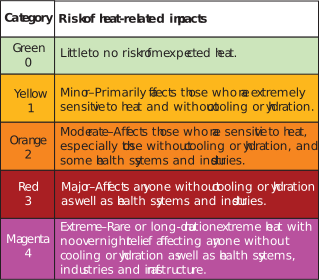
HeatRisk is a new National Weather Service tool. It uses a 5-level color scale to forecast heat danger. Each color level shows who faces the most danger and how to stay safe. Higher numbers mean a greater chance of heat illness.
HeatRisk identifies unusual heat for specific dates and locations. This helps the tool adjust for local climates and how used to the heat people are. The tool looks at the following factors to forecast heat risk:
- Forecasted humidity levels.
- How long the heat wave lasts and if it cools down at night.
- How unusual the high and low temperatures are for the local area.
- The time of year.
- Whether the heat creates a high risk for heat-related illness or heat stress.
In the western United States, heat watch/warning/advisory decisions and messaging from the National Weather Service (NWS) offices are based on HeatRisk.
The HeatRisk tool can be accessed here.
The HeatRisk categories for risk of heat-related impacts can be viewed below:
|
Extreme heat The term "extreme heat" is used to discuss health risks from heat. Extreme heat is defined in a couple ways:
Extreme heat increases the risk of severe heat-related illness. Regular heat can still cause negative health effects. |